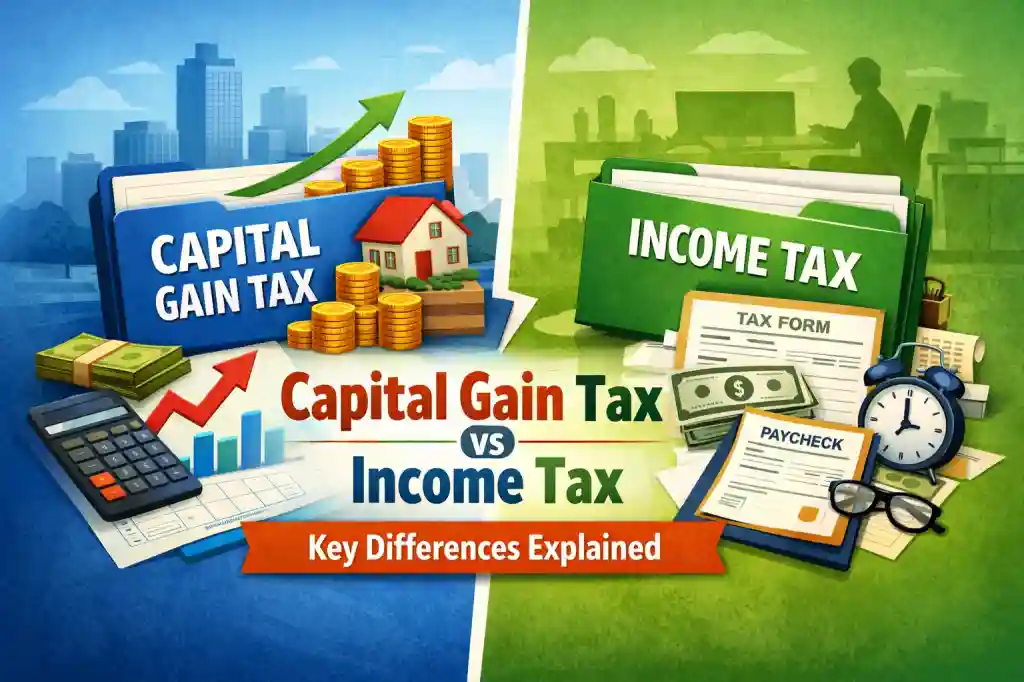
A single disposal can sit on either side of the UK tax system, and getting the answer wrong is an expensive mistake. Understanding Capital Gains Tax vs Income Tax starts with one core idea: Income Tax charges money you earn, while Capital Gains Tax charges profit you make when you sell something that has grown in value. The two taxes have separate allowances, separate rates, and separate rules, so the label attached to a transaction can change the bill dramatically.
This guide compares Capital Gains Tax vs Income Tax side by side, explains how HMRC decides which one applies, and works through a real example so you can see the difference in cash terms.
What Is Income Tax?
Income Tax is charged on money you receive on a recurring or trading basis: your salary, self-employment profits, rental income, pension payments, and most interest and dividend income above their own allowances. For 2026/27, the Personal Allowance is £12,570, and income above that is taxed at 20% (basic rate), 40% (higher rate), or 45% (additional rate), depending on your total income for the year.
What Is Capital Gains Tax?
Capital Gains Tax applies when you dispose of a chargeable asset at a profit, such as a second property, shares outside an ISA, a business, or valuable personal possessions. Only the gain is taxed, not the full sale price, and everyone has an Annual Exempt Amount of £3,000 for 2026/27 before any tax is due. Rates depend on the asset and your income tax band: property gains are taxed at 18% or 24%, while gains on shares and most other assets are taxed at 18% or 24% as well following recent rate alignment, with the rate you pay on each pound of gain depending on how much of your basic rate band is already used by your income.
Capital Gains Tax vs Income Tax: The Key Differences
| Feature | Income Tax | Capital Gains Tax |
| What it taxes | Earnings and recurring income | Profit on disposal of an asset |
| Annual tax-free amount | Personal Allowance: £12,570 | Annual Exempt Amount: £3,000 |
| Rates | 20% / 40% / 45% | 18% / 24% (most assets) |
| When it is charged | When income is received | When an asset is sold or given away |
| Reporting | PAYE or Self Assessment | Self Assessment, or 60-day property return |
Worked Example: Same £20,000 Profit, Two Different Bills
Imagine a higher-rate taxpayer makes an extra £20,000 in a tax year. If HMRC treats it as trading income, added to their existing salary, the whole £20,000 is taxed at 40%, creating an £8,000 bill with no separate allowance available. If the same £20,000 is treated as a capital gain from selling shares, the first £3,000 is covered by the Annual Exempt Amount, leaving £17,000 taxable at 24%, for a bill of £4,080. The classification of the same profit changes the tax due by nearly £4,000.
How HMRC Decides Which Tax Applies: The Badges of Trade
When it is not obvious whether a profit is trading income or a capital gain, HMRC applies a set of tests known as the badges of trade. These look at factors such as how often you buy and sell similar assets, how long you hold them before selling, whether you made any improvements to increase the value, and whether the activity looks like a business rather than a one-off investment. Someone who buys and renovates several properties a year to resell quickly is likely to be trading, and taxed under Income Tax, while someone who sells their long-held second home is far more likely to fall under Capital Gains Tax.
Common Situations Where the Two Taxes Interact
Selling an Investment Property
A landlord’s rental income is taxed as Income Tax every year, but when the property is eventually sold, any profit on the sale is taxed separately as a capital gain, not as additional rental income.
Selling Shares and Investments
Dividends received while holding shares are taxed as income above the Dividend Allowance, but the profit made when the shares themselves are eventually sold is a capital gain, assessed separately using the Annual Exempt Amount and CGT rates.
Cryptoassets
For most individual investors, profit from selling cryptoassets is treated as a capital gain, but HMRC can treat frequent, business-like crypto trading as taxable income instead, using the same badges of trade tests applied to property and shares.
Side Hustles and Occasional Selling
Regularly buying items to resell for profit is normally trading income, taxed alongside your other earnings, whereas selling personal possessions you no longer need is far more likely to fall outside both taxes entirely, or occasionally within Capital Gains Tax if the item is valuable enough.
Why Getting the Classification Wrong Is Costly
If HMRC decides that income you reported as a capital gain should actually have been taxed as trading income, you can face a backdated Income Tax and National Insurance bill, plus interest and penalties for careless or deliberate inaccuracy on your Self Assessment tax return. Getting professional advice before a large or unusual disposal is far cheaper than correcting the position after HMRC opens an enquiry.
How Capital Gains Tax Experts Can Help
At Capital Gains Tax Experts, we help individuals and business owners work out whether a profit falls under Income Tax or Capital Gains Tax, and how to plan disposals to make the most of your Annual Exempt Amount and available reliefs. If you are unsure how a sale will be taxed, or you are approaching the 60-day property reporting deadline, speak to our team before you complete the transaction. Married couples can also review our guide on how to transfer CGT allowance between spouses to reduce a joint tax bill.
Frequently Asked Questions About Capital Gains Tax vs Income Tax
Is it better to be taxed as income or capital gains?
Capital Gains Tax is usually cheaper than Income Tax on the same amount of profit, because CGT rates of 18% and 24% are generally lower than the 40% and 45% higher and additional Income Tax rates, and gains benefit from their own separate Annual Exempt Amount.
Is CGT the same as income tax?
No. Capital Gains Tax and Income Tax are separate taxes with different allowances, different rates, and different rules about what they apply to, even though both are administered by HMRC through Self Assessment.
How much tax do you pay on capital gains in the UK?
For 2026/27, most gains above the £3,000 Annual Exempt Amount are taxed at 18% for basic rate taxpayers and 24% for higher and additional rate taxpayers, though the exact rate depends on the type of asset and your total taxable income.
How to avoid capital gains tax in the UK?
You cannot legally avoid tax on a genuine chargeable gain, but legitimate planning includes using your full Annual Exempt Amount each year, transferring assets to a spouse before sale, holding investments in an ISA, and timing disposals across different tax years.
Reporting Deadlines Differ Too
Income Tax on employment is usually collected automatically through PAYE, while self-employment profits and most capital gains are reported through Self Assessment by 31 January after the end of the tax year. Capital Gains Tax on UK residential property is the exception: it must be reported and paid within 60 days of completion, far sooner than the normal Self Assessment deadline, so property sellers need to plan ahead to avoid an automatic penalty.
Do reliefs work the same way for both taxes?
No. Income Tax reliefs, such as pension contributions and the trading allowance, reduce your taxable income, while Capital Gains Tax reliefs, such as Private Residence Relief and Business Asset Disposal Relief, reduce or eliminate the taxable gain on a specific disposal. The two sets of reliefs cannot generally be swapped between the taxes.
Getting the Classification Right
Whether a profit falls under Capital Gains Tax vs Income Tax depends on what you sold, how you used it, and how HMRC’s badges of trade apply to your circumstances. If you are planning a significant disposal, speak to our team before you sell so the correct tax, and the lowest legitimate bill, is applied from the start.