Skip links
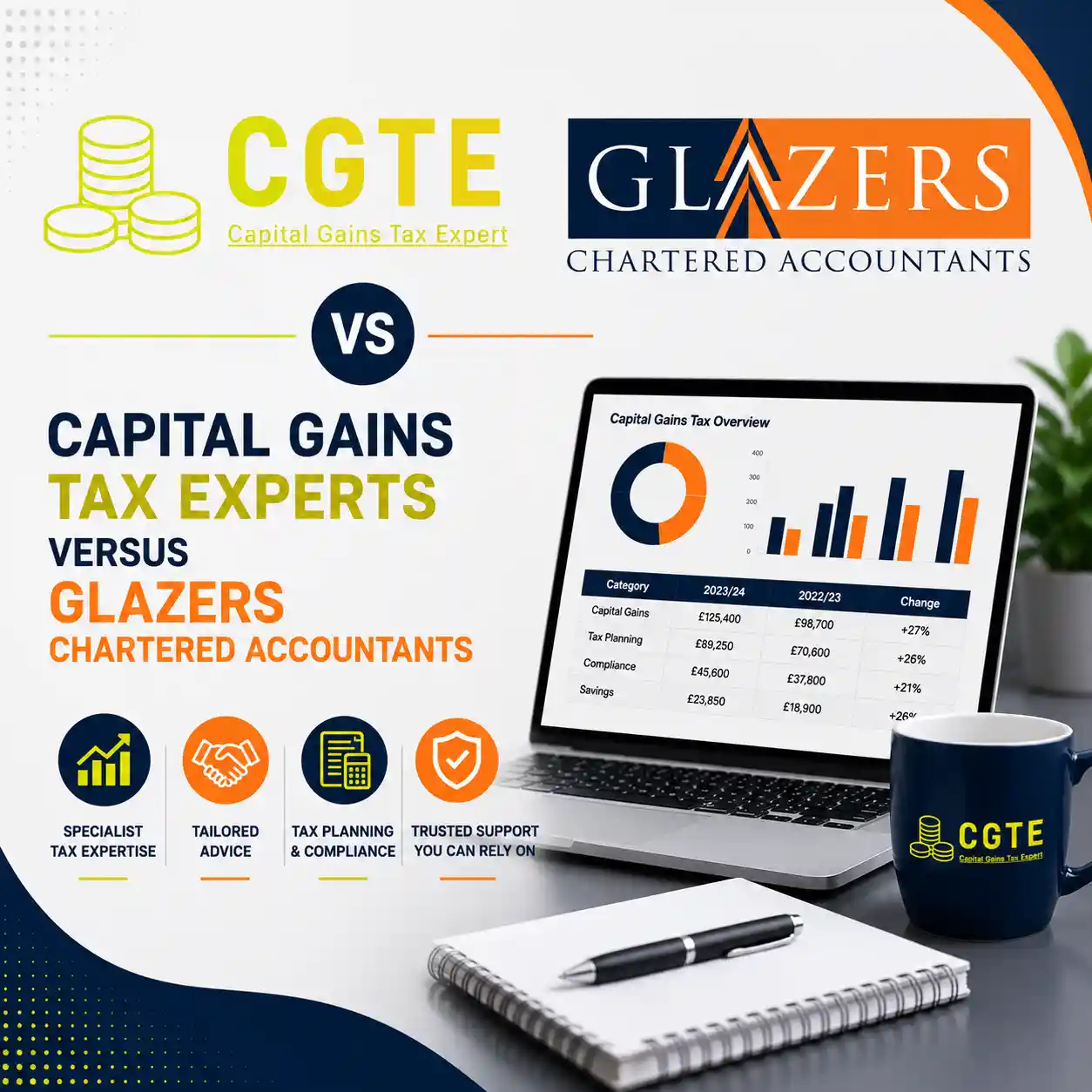
Capital Gains Tax Experts versus Glazers Chartered Accountants

Capital Gains Tax Experts versus Glazers Chartered Accountants


If you are comparing Capital Gains Tax Experts versus Glazers Chartered Accountants, the choice depends on whether you require a dedicated capital gains tax specialist or a broad chartered accounting firm. Standard commercial bookkeepers frequently make errors regarding asset valuation and matching rules. By securing a dedicated professional, you ensure your transactions are structured efficiently before you sell, maximizing your reliefs safely.

Relying on specialized financial support guarantees your portfolio remains compliant with HMRC while protecting your wealth.

In the current financial environment, capital gains tax has become one of the most significant considerations in modern financial decision-making, particularly for property owners, investors, entrepreneurs, and individuals managing diversified wealth portfolios. In an environment where taxation rules continue to evolve and asset values fluctuate rapidly, the ability to plan effectively for capital gains can make a substantial difference in overall financial outcomes.

Whether the transaction involves selling investment property, disposing of company shares, restructuring a business, or transferring assets across generations, the tax implications are often complex enough to require specialist intervention.

As a result, individuals and businesses are increasingly turning to professional advisors who can provide both technical accuracy and strategic foresight in managing capital gains tax obligations.

Within this growing advisory space, two names that often emerge are Capital Gains Tax Experts and Glazers Chartered Accountants. Although both offer services related to capital gains tax, they represent two distinctly different approaches to financial advisory support. One is built around deep specialization in capital gains tax planning, while the other integrates capital gains services into a broader, full-spectrum accounting and business advisory framework. Understanding the difference between these two models is essential for anyone seeking to optimize financial decisions in relation to taxable asset disposals.

The Technical Nature of Capital Gains Tax Planning

Capital gains tax itself is not simply a charge on profit. It is a highly technical area of taxation influenced by timing, asset structure, ownership arrangements, applicable reliefs, exemptions, and evolving legislative rules. In many cases, the difference between an efficient and inefficient tax outcome is determined long before a transaction is completed.

Strategic planning can reduce liabilities significantly, while a lack of preparation can lead to avoidable financial loss. This is why professional guidance has been increasingly important, particularly for high-value transactions where even small percentage differences in tax exposure can translate into substantial monetary impacts.

To manage your liability safely, you must follow a structured process:

i. Identify the exact baseline value of the asset.
ii. Deduct all allowable buying and selling costs.
iii. Apply all eligible statutory exemptions.
iv. Structure the transaction timing to align with favorable tax years.

Choosing a dedicated capital gains tax specialist ensures every single one of these steps is handled with absolute precision under current HMRC guidance.

The Specialized Capital Gains Tax Specialist Approach

Against this backdrop, Capital Gains Tax Experts positions itself as a focused specialist service dedicated primarily to capital gains tax optimisation. Rather than offering a broad range of accounting services, its model is centered on a single area of expertise, managing and reducing capital gains tax liabilities through targeted planning strategies.

This kind of specialization is particularly relevant in situations involving complex asset disposals, such as multi-property portfolios, business exits, or share transactions involving layered ownership structures.

A specialist approach to capital gains tax typically prioritizes precision and transaction-specific strategy. Clients working with a dedicated capital gains tax focused service often require support in identifying available reliefs, structuring disposals efficiently, and ensuring that timing decisions align with tax advantages.

Because capital gains legislation can be intricate and frequently updated, specialists tend to focus deeply on the technical details that influence outcomes, such as allowable deductions, tapering mechanisms, and exemptions linked to business or investment activity. The primary advantage of this model is depth of expertise, allowing clients to receive highly concentrated guidance tailored specifically to capital gains tax scenarios.

This approach is especially attractive to individuals who are not seeking general accounting support but instead require targeted assistance for a particular financial event. For example, someone selling a long-held investment property or exiting a business may prioritize reducing tax exposure on that single transaction rather than engaging in broader financial planning services. In such cases, a specialist model offers clarity, efficiency, and direct technical focus.

The Broad Glazers Chartered Accountants Model for Capital Gains Tax

In contrast, Glazers Chartered Accountants adopts a much broader advisory structure, where capital gains tax planning forms just one component of a comprehensive suite of financial services. As a chartered accountancy firm, Glazers provides support across areas such as audit, corporate finance, taxation, business advisory, and wealth management. According to its professional service framework, the firm offers capital gains tax guidance alongside broader financial planning, including investment structuring, property transactions, business disposals, inheritance planning, and succession strategies.

This integrated model reflects a traditional chartered accountancy philosophy in which tax planning is not isolated but instead considered within the wider context of the financial life of a client. For many individuals and businesses, this holistic approach can be particularly valuable.

A capital gains event is rarely an isolated occurrence. It often intersects with retirement planning, business succession, estate structuring, and long-term investment strategy. By addressing all these areas within a unified advisory relationship, a firm like Glazers can ensure that tax decisions align with broader financial objectives.

The advantage of this model lies in continuity and coordination. Business owners, for instance, may require simultaneous advice on how selling a company will affect not only capital gains tax but also inheritance planning, cash flow management, and future investment strategy. A multi-disciplinary firm is well positioned to provide this type of integrated guidance, ensuring that decisions in one area do not unintentionally create disadvantages in another.

Comparing Advisory Models for Capital Gains Tax

When comparing the two approaches, the distinction becomes clearer in terms of advisory philosophy. Review the core differences in the strategy table below.

Service Area Capital Gains Tax Experts Glazers Chartered Accountants
Core Focus Specialist capital gains tax strategy Broad accounting and auditing
Primary Method Proactive structuring before sale Compliance integrated with business accounts
Target Audience Property landlords, share traders, and exits General corporate and SME clients
Service Scope Targeted asset tax optimization Multi-disciplinary financial services

Property Taxation and Capital Gains Tax Complexities

Property taxation is an area where both models are particularly relevant. The taxation of property gains has become increasingly complex due to regulatory changes, reporting requirements, and evolving relief structures. Property investors often need guidance not only on calculating gains but also on structuring ownership, managing joint assets, and understanding reporting deadlines.

A specialist service like Capital Gains Tax Experts may be especially effective in addressing technical property-related capital gains tax issues, while Glazers Chartered Accountants may provide broader property tax advice integrated with investment and wealth strategies.

Client experience also differs significantly between the two models. A specialist firm often provides a more focused, direct advisory relationship centered entirely on capital gains tax concerns. This can create a streamlined experience for clients who prefer working with experts in a specific field without navigating broader service structures. The interaction is typically concentrated around a particular transaction or tax issue.

In contrast, a full-service chartered accountancy firm tends to develop long-term advisory relationships that extend beyond a single tax event. Clients may engage with such a firm over many years, receiving ongoing support across business operations, tax compliance, financial planning, and strategic development. This continuity can be particularly beneficial for clients with evolving financial needs that extend beyond capital gains tax considerations.

Conclusion on Capital Gains Tax Support

Ultimately, the choice between Capital Gains Tax Experts and Glazers Chartered Accountants is not a matter of superiority but of suitability. Each serves a different type of client requirement. Those seeking highly specialized, transaction-focused capital gains tax expertise may find greater value in a dedicated capital gains tax focused service. Meanwhile, individuals and businesses requiring integrated financial planning across multiple areas may benefit more from the broader advisory structure offered by a chartered accountancy firm.

Capital gains tax continues to play an increasingly important role in wealth management and financial planning. As asset values rise and tax regulations become more intricate, the need for informed, strategic advice will only grow stronger.

Whether through specialist expertise or integrated advisory services, the key objective remains the same: ensuring that financial decisions are made with clarity, efficiency, and long-term value in mind.

Ready to secure expert help for your asset disposal? Contact our dedicated team at Capital Gains Tax Experts today. We ensure your wealth remains totally secure while you focus entirely on enjoying your hard earned profit safely.

People Also Ask About Capital Gains Tax

1. Why is specialist capital gains tax advice important?

Capital gains tax rules are highly complex and constantly evolving. Specialist advice helps reduce liabilities legally, ensure total compliance with HMRC, and identify valuable tax-saving opportunities before a transaction occurs.

2. What makes Capital Gains Tax Experts different for capital gains tax?

Capital Gains Tax Experts focuses specifically on capital gains tax planning, structuring, and optimisation rather than offering broad corporate accounting, bookkeeping, or auditing services.

3. Can both firms assist with property capital gains tax?

Yes. Both firms provide guidance relating to property disposals, investment gains, and associated tax planning. However, a specialist firm is often better suited to calculate complicated shared-occupancy reliefs and manage the strict 60-day reporting deadlines.

4. Can capital gains tax legally be reduced?

Yes. Professional tax planning can help reduce liabilities through statutory reliefs, exemptions, ownership structuring, interspousal transfers, and strategic timing of disposals.

5. When is the best time to seek capital gains tax planning?

The absolute best time to seek advice is well before selling or transferring an asset. Early planning provides significantly more opportunities to structure transactions efficiently and avoid unnecessary capital gains tax liabilities.

GET A FREE CGT CONSULTATION