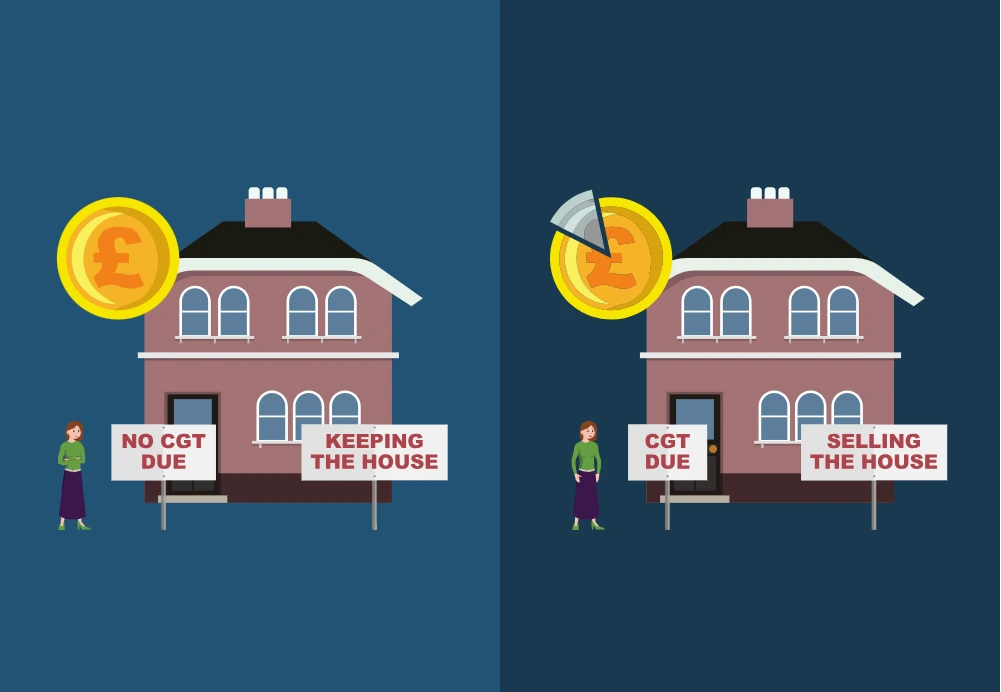
The inheritance of a property is a major financial milestone, yet it frequently brings unexpected tax complexities that require immediate attention. Many beneficiaries and executors believe that selling an inherited asset will automatically trigger a heavy tax bill based on the original purchase price paid by the deceased person decades ago. In reality, the tax system is governed by specific re-basing rules that dictate your starting point for any future gain.
With more than ten years of experience advising clients on property transactions and estate administration, we understand that strategic decision-making at the point of inheritance is the difference between a seamless transition and a burdensome tax bill. Deciding whether the estate or the beneficiary should handle the disposal is the foundational step in effective tax planning.
The direct answer is yes, under specific circumstances. You do not pay Capital Gains Tax simply because you inherit a property. The tax liability only arises if the property is later sold, gifted, or transferred, and only if the final sale proceeds exceed the acquisition base cost, after deducting allowable selling and enhancement costs.
This comprehensive guide explains the exact rules of calculation, the critical role of valuations, and the planning opportunities that can help minimize your final tax liability.
How the Gain Arises Under UK Tax Law
To understand your potential tax liability, you must first understand the fundamental mechanism of the UK tax system regarding deceased estates. Under the rules of the Taxation of Chargeable Gains Act 1992, particularly section 62(1), the personal representatives of the deceased person are treated as acquiring the assets at their market value on the exact date of death.
This is a vital legal protection for families. The baseline cost for all future calculations is reset to the fair market value established at probate, rather than the amount the deceased person originally paid. This re-basing to the date of death value is highly beneficial. It prevents double taxation by ensuring that the growth in value that occurred during the lifetime of the deceased person is entirely exempt from Capital Gains Tax for both the estate and the beneficiaries.
The practical consequence of this re-basing is that your tax exposure is measured strictly by reference to the growth in value that occurs after the death of the previous owner. When you eventually decide to sell the property, your tax position will fall into one of three distinct categories:
- Sale Above Probate Value: If the property market rises during the administration period and you sell the property for more than the date of death valuation, the excess profit is a chargeable gain. You must calculate and report the tax owed on this specific post-death growth.
- Sale Exactly at Probate Value: If you sell the property shortly after the death of the owner, the sale price will often match the probate value perfectly. Because there is exactly zero capital growth, you make zero profit on paper and pay exactly zero pounds in tax.
- Sale Below Probate Value: If the local property market declines and you sell the property for less than its probate value, you generate a capital loss. You can report this loss to HMRC and use it to offset other profitable asset sales.
How the Gain Is Calculated: The Core Formula
To determine your potential tax liability, you must establish the chargeable gain. The computation follows a structured process, and every deduction must be supported by clear evidence.
The basic computation is:
- Sale proceeds
- Less incidental costs of disposal
- Less probate or date of death market value
- Less allowable enhancement expenditure
- Equals the chargeable gain
Analyzing the Components of the Calculation
To ensure complete accuracy, it is important to analyze what each component of this formula represents:
I. Sale Proceeds
This is the final gross price agreed upon with the buyer at the completion of the transaction. It serves as the starting figure for the entire tax calculation.
II. Incidental Costs of Disposal
You are legally permitted to deduct costs that are directly associated with selling the property. These include professional estate agent commissions, conveyancing solicitor fees, and any valuation costs incurred specifically to facilitate the disposal.
III. Probate or Date of Death Market Value
This is your base cost. It represents the estimated market value of the property at the exact date of the death of the previous owner. Getting this figure right is the most important factor in the entire calculation.
IV. Allowable Enhancement Expenditure
You can deduct capital expenses that have added value to the property during your period of ownership. This includes structural alterations, extensions, or major renovations that are still reflected in the state of the property at the time of disposal.
Please note that routine repairs and maintenance, such as repainting, fixing a roof, or replacing a standard boiler, are classified as revenue expenses. These are considered routine maintenance and do not enhance the base cost for Capital Gains Tax purposes.
A Detailed Worked Illustration
To understand how these components interact, let us review a practical scenario using specific financial figures. Consider a property that is inherited and later sold with the following details:
- Sale proceeds: £360,000
- Disposal costs: £6,000
- Date of death market value: £300,000
- Enhancement expenditure: £20,000
The calculation of the chargeable gain is performed as follows:
- Gross sale proceeds: £360,000
- Less disposal costs: -£6,000
- Net sale proceeds: £354,000
- Less date of death probate value: -£300,000
- Interim gain: £54,000
- Less enhancement expenditure: -£20,000
- Chargeable gain: £34,000
We can verify this calculation using the following formula:
£360,000 − £6,000 − £300,000 − £20,000 = £34,000
This £34,000 is the final chargeable gain. It is important to emphasize that this is the gain before deducting any available annual exempt amount, personal capital losses, or specific tax reliefs. The actual final tax bill depends entirely on the status of the seller and the available exemptions.
Why the Identity of the Seller Matters
One of the most significant tactical decisions in estate planning is deciding who should complete the sale of the inherited property. The tax rules, available exemptions, and tax rates differ depending on whether the personal representatives or the beneficiaries make the disposal.
Scenario A: If the Personal Representatives Sell
When the personal representatives of the deceased person sell the property during the administration period, the transaction is handled by the estate.
- Base Cost: The estate uses the date of death market value of £300,000 as the starting base cost.
- Tax Responsibility: The estate is taxed on the gain, and the personal representatives must report and pay the tax.
- Annual Exempt Amount: Personal representatives are entitled to the annual exempt amount, but only for the tax year of the death and the following two tax years. After this three year window closes, the estate loses its annual exemption entirely. For the 2025 to 2026 tax year and the 2026 to 2027 tax year, the annual exempt amount is £3,000.
- Tax Rates: Personal representatives are charged at a flat rate of 24 percent on all residential property gains.
Scenario B: If the Beneficiary Sells
Alternatively, the personal representatives can transfer the property to the beneficiary before a sale is agreed. This transfer is known as a transfer in specie or an appropriation.
- No-Gain/No-Loss Transfer: The transfer from the estate to the beneficiary generally does not trigger an immediate Capital Gains Tax charge for the personal representatives.
- Base Cost: The beneficiary takes over the property using the same date of death market value of £300,000 as their acquisition base cost.
- Tax Advantages: Selling as an individual beneficiary is often much more efficient than selling as an estate because:
- The beneficiary can utilize their own personal annual exempt amount under section 1K of the Taxation of Chargeable Gains Act 1992, which is £3,000 for individuals.
- The beneficiary can offset current year or brought forward personal capital losses against the gain of £34,000, which can reduce the tax bill significantly.
- If the beneficiary genuinely occupies the property as their only or main residence, they may qualify for Private Residence Relief to reduce or completely eliminate the gain.
Strategic Planning: Estate Sale versus Transfer in Specie
Determining the optimal path for disposal requires a careful evaluation of the benefits and drawbacks of each approach.
The Estate Sale Route
- Pros: This route is often administratively simpler because the personal representatives handle the entire transaction directly through the estate bank account. This can prevent disputes among multiple beneficiaries during the sale process.
- Cons: The estate is subject to a flat 24 percent tax rate on residential gains. Furthermore, if the sale completes outside the permitted three year period, the estate will have zero tax free allowance remaining, exposing the entire £34,000 gain to tax.
The Transfer in Specie Route
- Pros: The transfer of the property title to the beneficiaries does not trigger a tax charge. Once the beneficiaries own the property, they can combine their individual £3,000 allowances to shield a massive portion of the £34,000 gain. If three beneficiaries inherit the property, they can shield £9,000 of the gain from tax. Furthermore, basic rate taxpayers may pay a lower 18 percent tax rate on their share of the profit, rather than the flat 24 percent estate rate.
- Cons: Managing a sale with multiple individual owners requires excellent coordination and agreement on pricing. It also requires separate tax reporting for each individual beneficiary.
Reporting Deadlines and HMRC Compliance
When dealing with a taxable gain on UK residential property, you must adhere to strict compliance timelines:
- The 60-Day Rule: If a Capital Gains Tax liability arises, you must submit a Capital Gains Tax on UK property return and pay the estimated tax on account within exactly 60 days of the completion date of the sale. This deadline is strictly enforced and is calculated from the date of completion, not from the exchange of contracts.
- The Resident Exemption: For UK residents, if no tax liability arises for example, because the gain is fully covered by Private Residence Relief or falls entirely within your annual exempt amount the 60-day return is not required.
- Self Assessment Integration: The 60-day reporting regime is a payment on account and does not replace your annual tax reporting obligations. The disposal must still be reported on your personal Self Assessment return or the estate return where required.
The payment made within 60 days is a best estimate. Your final tax liability may be adjusted once the full tax year position is confirmed, especially if you realize capital losses later in the same tax year.
Practical Watchpoints for Executors and Beneficiaries
To ensure absolute compliance and protect your family wealth, you must monitor several critical areas closely:
I. The Critical Role of Valuations
The accuracy of the date of death valuation is the single most important factor in determining the final Capital Gains Tax liability. HMRC examines these figures closely. If Inheritance Tax was payable on the estate, the property value was formally ascertained, and this value is fixed as your CGT base cost. If no Inheritance Tax was due, the value is not automatically fixed, so obtaining a robust professional valuation from a qualified surveyor is essential.
II. Capital Enhancement versus Revenue Repairs
You must carefully categorize all expenses incurred during your ownership. Documented costs for structural alterations, extensions, or major installations qualify as capital enhancement expenditure and reduce your taxable gain. General maintenance, redecorating, or minor repairs are revenue expenses and must be excluded from the calculation.
III. The Scale of the Property Rise
If the property has increased in value only modestly since death, the tax exposure may be limited once your exemptions and losses are factored in. However, if the property value has risen sharply, the choice of seller and the timing of the disposal become significantly more important.
Conclusion
The calculation of Capital Gains Tax on inherited property is based entirely on the growth in value that occurs after the date of death, rather than the original purchase price paid by the deceased person. Because the tax outcome depends heavily on whether the estate or the individual beneficiary completes the sale, early planning is essential.
Choosing the right party to sell, securing an accurate date of death valuation, and utilizing available reliefs such as capital losses or Private Residence Relief can significantly protect your inherited wealth.
Given the complexity of HMRC rules and the strictness of the 60-day reporting window, we recommend seeking professional advice before entering into any sale agreements. If you are currently managing an inherited property and require assistance with your calculations, our specialist team is available to help you plan your next steps and ensure full compliance.
People Also Ask – Frequently Asked Questions, FAQs
1. Do I need to pay Capital Gains Tax on property I inherit?
No. You do not pay Capital Gains Tax simply because you inherit a property. The inheritance itself is not a taxable disposal. You only face a potential tax liability if you later decide to sell, gift, or transfer the property, and only if the sale value has increased above the market value on the date of death.
2. What is the base cost of an inherited property?
The base cost is the fair market value of the property on the exact date of the death of the previous owner. This is often referred to as the probate value, and it completely replaces the original purchase price paid by the deceased person.
3. Can I deduct estate agent and solicitor fees from the gain?
Yes. You are legally allowed to deduct all professional costs directly associated with the sale of the property. This includes estate agent commissions, legal conveyancing fees, and any surveyor fees paid to establish the probate value.
4. What is the tax rate for estates selling residential property?
Personal representatives of an estate pay a flat rate of 24 percent on all residential property gains. Individual beneficiaries pay either 18 percent or 24 percent, depending on their total personal taxable income.
5. How long do I have to pay Capital Gains Tax after selling an inherited property?
If a Capital Gains Tax liability arises on the sale of a UK residential property, you must report the gain and pay the estimated tax to HMRC within exactly 60 days of the completion date of the sale.